Setting Up Shop from Afar: Your Essential Guide to UK Expat Company Formation

Hey there, fellow global citizen! Ever dreamt of running your own UK business while sipping lattes on a Roman piazza or managing projects from a beach in Bali? You’re not alone. Many British expats, and indeed non-UK residents, are discovering the incredible advantages of forming a company in the United Kingdom. It might sound a bit complex when you’re not physically on British soil, but trust me, it’s totally doable and can open up a world of opportunities. Let’s dive into how you can make your entrepreneurial dreams a reality, no matter where in the world you’re currently calling home.Why Form a UK Company as an Expat?So, why bother with a UK company when you’re living abroad? Good question! There are some pretty compelling reasons: Prestigious Reputation: The UK is a global hub for business, and a UK-registered company carries a lot of weight internationally. It builds trust with clients and partners worldwide. Simple Setup Process: Compared to many other countries, the UK company formation process is surprisingly straightforward and quick, especially if you have the right guidance. Favorable Tax Environment: While you’ll need to understand your tax obligations both in the UK and your country of residence, the UK offers a competitive corporate tax rate. Access to UK Markets: If your business has a connection to the UK, having a registered company makes it much easier to engage with UK customers, suppliers, and financial institutions. Gateway to Europe and Beyond: Despite Brexit, a UK company can still be a strategic base for international operations, thanks to its extensive network of trade agreements and robust legal framework.

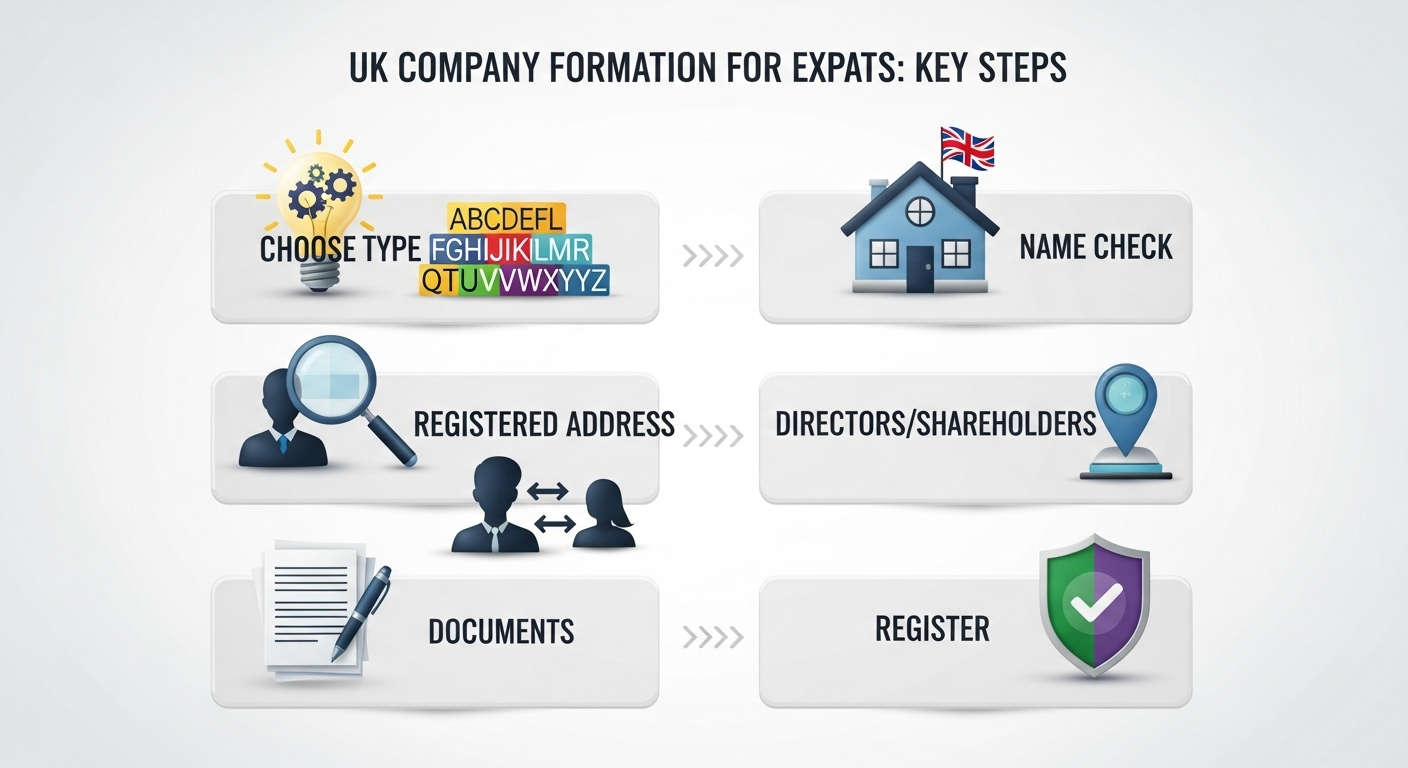
Key Steps to UK Company Formation for ExpatsReady to get started? Here’s a rundown of the crucial steps involved in setting up your UK company from abroad: 1. Choose Your Company Type: The most common choice for expats is a Limited Company (Ltd). This offers limited liability, meaning your personal assets are protected if the business runs into financial trouble. An LLP (Limited Liability Partnership) is another option, often preferred by professionals. 2. Pick a Killer Company Name: Your company name needs to be unique and not already registered with Companies House. Make sure it reflects your brand and is easy to remember! You can check availability on the Companies House website. 3. Secure a Registered Office Address: This is a legal requirement. Your company must have a physical address in the UK. Don’t worry, you don’t need to rent an office! Many service providers offer a virtual office or registered office address service specifically for this purpose. 4. Appoint Directors and Shareholders: For a limited company, you’ll need at least one director and one shareholder. Often, these can be the same person. There are no residency requirements for directors or shareholders, making it perfect for expats! 5. Prepare Your Memorandum and Articles of Association: These are the foundational documents of your company. The Memorandum states that the subscribers (shareholders) wish to form a company, and the Articles set out the rules for how the company will be run. Standard templates are usually available, or you can get bespoke ones. 6. Register with Companies House: This is the final step in the formation process. You’ll submit all the necessary information and documents to Companies House, the UK’s registrar of companies. This can be done online, often through a company formation agent.






Post-Formation Considerations: Don’t Forget These!Once your company is officially formed, the real fun begins! But also, the real responsibilities. Here’s what you’ll need to sort out: Open a UK Business Bank Account: This can sometimes be the trickiest part for expats, as many traditional banks prefer directors to be UK residents. However, many challenger banks and specialist financial institutions are now expat-friendly. Do your research! Understand Your Tax Obligations: Corporation Tax: Your company will pay Corporation Tax on its profits. VAT (Value Added Tax): If your company’s taxable turnover exceeds the VAT threshold, you’ll need to register for VAT. Personal Tax: As a director, you’ll need to understand how your salary/dividends from the UK company are taxed in your country of residence and if there are any UK tax implications (e.g., if you receive income while temporarily in the UK). Double-check double taxation treaties! Stay Compliant: Your UK company will have ongoing compliance requirements, such as filing annual accounts and a confirmation statement with Companies House. Missing these deadlines can lead to fines and even striking off your company.Common Challenges & SolutionsLet’s be real, managing a business from afar isn’t always a walk in the park. Here are a couple of hurdles you might face and how to clear them: Residency vs. Business Presence: While directors don’t need to be UK residents, having too much of your business activity (e.g., decision-making, physical assets) outside the UK could potentially raise questions about where your company is truly ‘tax resident’. This is where professional advice is paramount. Remote Management & Communication: Time zones, internet reliability, and staying connected with any UK-based team or services can be a challenge. Embrace technology – video calls, cloud-based tools, and good project management software are your best friends. Finding Trusted Advisors: Navigating UK company law and tax as an expat requires expert help. Invest in a good accountant and a company formation agent who specialize in international clients. They can save you a lot of headaches (and money!).

Conclusion:Forming a UK company as an expat is a fantastic way to legitimize your international business ventures, enhance your credibility, and potentially benefit from a stable and respected business environment. While there are definitely steps to follow and considerations to keep in mind, with the right planning, professional support, and a can-do attitude, you can absolutely make it happen. So, go on, take that leap – your global business journey awaits!